Quiet Rituals That Make Home Feel Like a Sanctuary
There’s a version of “home life” that gets shared a lot online. Perfect mornings. Sunlight at the exact right angle. Coffee untouched by time. Everything calm, curated, and somehow uninterrupted.
Real life is quieter than that. And messier. And honestly, better.
Over time, I’ve learned that a calm home isn’t created through big transformations or expensive changes. It’s built through small, repeatable rituals. The kinds of things that don’t photograph perfectly, but change how a space feels when you live in it.
These are the quiet rituals that make my home feel like a sanctuary. Not a showroom. Not a project. Just a place to land.
Letting the day start slowly
I don’t rush mornings anymore.
That doesn’t mean they’re always peaceful or aesthetic. It just means I stopped forcing them to be productive right away. I let the light come in. I make coffee or tea without multitasking. I sit down before the day asks anything of me.
Even ten quiet minutes changes the tone of the entire house. It tells my nervous system that this space is safe, unhurried, and mine.
Keeping a few things intentionally imperfect
A calm home doesn’t mean everything is finished.
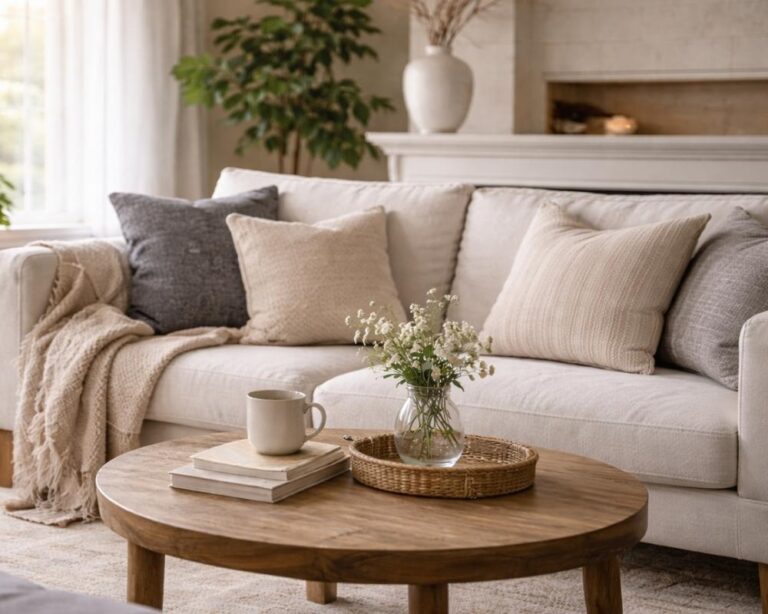
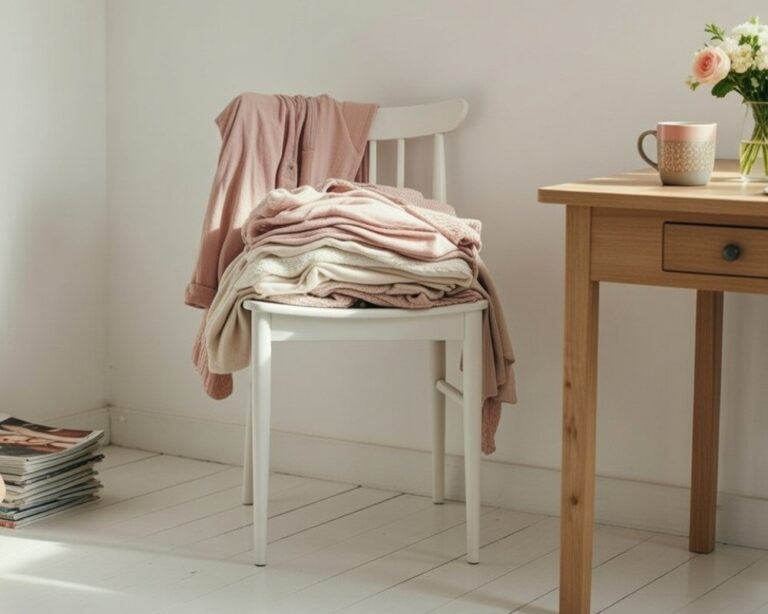
I leave a throw folded slightly wrong on the couch. A book stays open on the table. The dogs’ blankets are always a little rumpled. These small signs of life make the space feel welcoming instead of precious.
Perfection creates distance. Lived in details create warmth.
Resetting at night instead of “cleaning”
At the end of the day, I don’t do a full clean. I do a reset.
Dishes go into the sink or dishwasher. Pillows get fluffed. Lights are dimmed. Surfaces are cleared just enough that tomorrow doesn’t feel heavy.
This ritual is less about tidiness and more about care. It’s a way of saying, tomorrow is already being looked after.
Creating pockets of quiet
Every home needs at least one place that exists purely for rest.
It doesn’t have to be a whole room. Sometimes it’s just a chair by a window, a corner of the couch, or a spot where the dogs always seem to settle. What matters is intention.
When a space is only for slowing down, your body learns that it’s allowed to rest there.
Using light as a signal
Lighting changes everything.
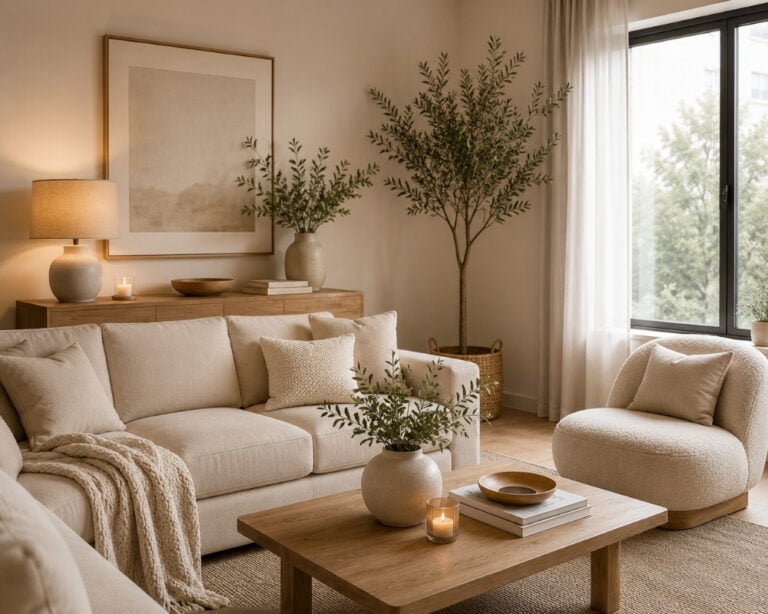
As the day winds down, lamps go on and overhead lights go off. Curtains get drawn. The house physically shifts into evening mode.
This ritual tells the home and the people in it that the pace is changing. Nothing else needs to happen for the day to feel complete.
Letting the house reflect the season
I don’t redecorate heavily with the seasons. I just adjust how the home feels.
Lighter blankets in warmer months. Cozier textures when it’s cold. A subtle shift in scent. Opening windows when possible. Closing in when needed.
These changes are small, but they keep the house feeling alive and responsive instead of static.
Allowing sound and silence to coexist
Some days the house is quiet. Other days it’s filled with soft music, a show playing in the background, or the familiar sounds of everyday life.
I’ve stopped trying to control that balance too tightly. Calm doesn’t always mean silence. Sometimes it just means comfort.
Ending the day where it feels safest
At night, everything gathers back to the same places.
The dogs curl up. Lights get low. The house feels smaller, softer, and held. This ritual anchors the day and reminds me why the space matters in the first place.
A sanctuary isn’t created through aesthetics alone. It’s created through repetition, intention, and gentleness.
The quiet rituals don’t demand perfection. They ask for presence. And over time, they turn a house into something that feels deeply, unmistakably like home.
Why rituals matter more than routines
Routines are rigid. Rituals are forgiving.
A routine says something has to be done a certain way or it doesn’t count. A ritual allows for variation, mood, and real life. That’s why rituals last and routines usually don’t.
In a home, rituals become emotional landmarks. They don’t just organize time, they create safety. When the same small actions repeat, even loosely, your home starts to feel predictable in the best possible way.
Predictability lowers stress. It tells your body what comes next. That’s why even something as simple as lighting a lamp at dusk can feel grounding.
The ritual of returning home
One of the most underrated moments of the day is coming back home.
I used to walk in already thinking about the next task. Now I pause. Shoes off. Bag down. Sometimes I open a window or turn on a lamp before anything else.
This tiny pause marks the transition between outside energy and inside calm. Over time, the house learns you’re home, and you feel it respond.
A sanctuary isn’t about what the house looks like when you arrive. It’s about how it receives you.
Letting scent do the heavy lifting
Scent is powerful because it bypasses logic.
A familiar smell can immediately soften a space without changing a single thing visually. I keep scent simple and consistent. One or two that feel like “home,” not a rotating collection.
The key is subtlety. A sanctuary never overwhelms. It whispers.
When the same scent appears in the evening or during quiet moments, your brain begins to associate it with rest. Over time, that association becomes automatic.
Creating comfort through repetition, not decor
People often think comfort comes from buying the right things.
In reality, comfort comes from familiarity.
The same mug used every morning. The same throw blanket reached for at night. The same chair that always seems to be taken.
When objects are used the same way repeatedly, they take on meaning. They stop being decor and start becoming part of the rhythm of the house.
That’s what makes a space feel personal instead of styled.
Giving permission for mess that means something
Not all clutter is the same.
There’s chaos clutter that drains you, and there’s life clutter that simply exists because living is happening. The trick is knowing the difference and not punishing yourself for the latter.
A stack of books you’re actually reading. Dog toys that migrate throughout the day. Notes on the counter from a conversation you don’t want to forget.
A sanctuary doesn’t erase these things. It makes room for them.
Building rituals around care, not control
Many people clean to feel in control.
I’ve learned to clean to feel cared for.
There’s a big difference. Control cleaning is frantic. Care cleaning is slow and intentional. It focuses on the spaces you use the most and lets the rest exist.
Wiping down a counter because you’ll be there in the morning. Making the bed because you want to return to it later. These actions are about future comfort, not perfection.
Allowing the house to change with you
A calm home evolves.
What felt comforting last year might feel heavy this year. What once felt minimal might now feel empty. A sanctuary isn’t frozen in time.
I regularly ask myself how the house feels instead of how it looks. If something starts to feel tight, loud, or overstimulating, I adjust. Sometimes that means removing something. Sometimes it means adding softness.
Listening to those shifts keeps the space aligned with your life.
Letting evenings close gently
The end of the day sets the tone for how the home holds you overnight.
I don’t rush bedtime anymore. Evenings slow down intentionally. Lights dim. Screens go off earlier than they used to. The house gets quieter, not suddenly, but gradually.
This ritual tells your body that it’s safe to power down. Over time, sleep improves not because of discipline, but because the environment supports it.
A sanctuary is felt, not photographed
The most important thing I’ve learned is this.
If a home feels calm, it doesn’t need to prove it.
A sanctuary doesn’t exist for social media. It exists for the people and pets who live there. It’s shaped by habits, pauses, and quiet moments that no one else sees.
And that’s exactly what makes it special.