How to Create a Home That Feels Calm Even When Life Isn’t
There are seasons of life when everything feels steady. Mornings are slow, routines stick, and your home naturally feels like a place to land. And then there are the other seasons. The loud ones. The messy ones. The ones where your brain feels busy before your feet even hit the floor.
During those times, the idea of a “calm home” can feel unrealistic. Almost insulting. Like something reserved for people who have it all together, wake up early, and never forget where their keys are.
But calm isn’t something you earn by having a perfect life. It’s something you can build into your space even when life itself feels chaotic.
A calm home doesn’t mean nothing ever goes wrong inside it. It means your space doesn’t add to the noise.
Calm doesn’t come from control. It comes from support.
Most people try to create calm by controlling their environment. Decluttering aggressively. Following strict systems. Aiming for a certain aesthetic. That approach works for some, but for many people it creates more pressure, not less.
A home that feels calm during stressful seasons works differently. It supports you instead of demanding things from you.
It allows for mess without shame. It forgives unfinished projects. It makes daily life easier instead of more performative.
The goal isn’t a home that looks calm. It’s a home that feels forgiving.
Start by identifying what drains you at home
Before adding anything new, it helps to notice what’s already pulling energy from you.
This isn’t about judgment. It’s about awareness.
Pay attention to the moments at home when you feel a subtle spike of stress. It might be opening a drawer that’s always jammed. It might be walking into a room that feels visually loud. It might be the constant hum of background noise or harsh lighting at night.
These little moments stack up. And over time, they make home feel like another place you have to manage instead of a place you can rest.
Calm begins when you remove friction.
You don’t have to fix everything at once. Pick one thing that consistently annoys you and soften it. That could be as small as moving a basket closer to where clutter naturally lands, or swapping a light bulb for a warmer one.
Tiny changes done intentionally have more impact than big overhauls done out of guilt.
Create visual quiet zones
When life feels chaotic, your brain is already working overtime. Visual clutter can make that worse, even if you don’t consciously notice it.
That doesn’t mean your entire home needs to be minimal. It means you benefit from having areas that are visually calm.
A quiet zone might be a cleared coffee table, a simple nightstand, or a section of your kitchen counter that stays mostly empty. It’s not about rules. It’s about relief.
These spaces give your eyes somewhere to rest. And when your eyes relax, your nervous system follows.
You can still have personality. Books. Decor. Memories. Just balance them with breathing room.
Calm isn’t emptiness. It’s spacing.
Let your home reflect real routines, not ideal ones
A lot of home stress comes from trying to live inside systems that don’t match your actual life.
If you always drop your bag by the door, that’s not a bad habit. That’s data. Your home should work with that, not against it.
Instead of forcing yourself to change, change the environment. Add a hook. Place a basket. Create a landing zone that acknowledges how you actually move through your space.
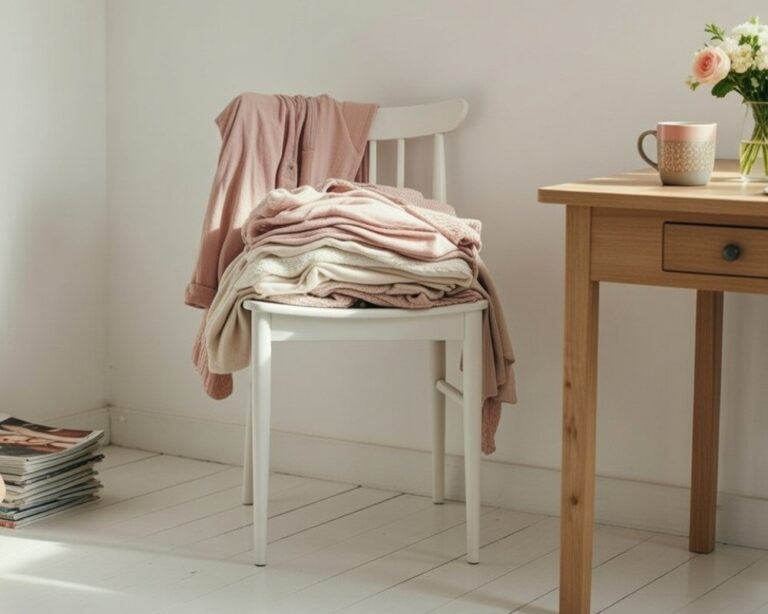
The same applies to laundry, paperwork, shoes, and everyday clutter. When your home supports your natural patterns, things feel calmer automatically. You’re not constantly correcting yourself.
A calm home meets you where you are.
Lighting matters more than people think
Lighting has a direct effect on how safe and relaxed a space feels.
Bright overhead lighting can be useful, but it’s rarely calming. Especially at night, when your body is trying to wind down.
Layered lighting changes everything. Table lamps. Floor lamps. Wall sconces. Soft pools of light instead of one harsh source.
Warm light in the evening tells your body it’s okay to slow down. It makes rooms feel more intimate and less exposed.
You don’t need expensive fixtures. Even a single lamp turned on at dusk can shift the entire mood of a room.
Calm often starts with dimmer switches and softer edges.
Sound is part of your environment too
When life is overwhelming, silence can feel heavy. But constant noise can be just as draining.
A calm home has intentional sound.
That might be quiet instrumental music, white noise, a fan, or simply choosing moments of true quiet. The key is that the sound is chosen, not accidental.
Background noise can help soften anxiety and make a space feel less sharp. It fills the room without demanding attention.
If your home feels tense, ask yourself what it sounds like. The answer matters more than you think.
Comfort is not a luxury
Softness isn’t indulgent. It’s regulating.
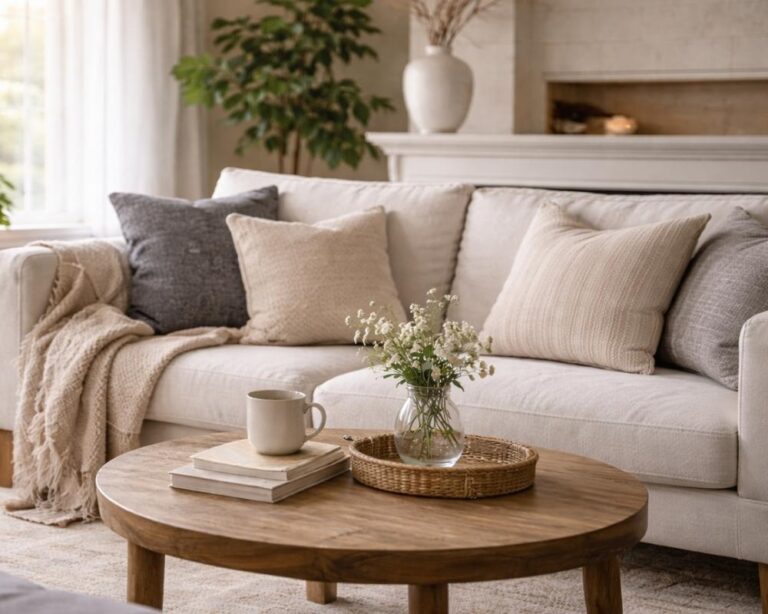
Cushions you actually lean on. Throws you actually use. Seating that invites you to sit, not just look.
When life feels chaotic, your body needs physical signals of safety. Texture provides that. Soft fabrics. Warm materials. Things that feel good to touch.
This doesn’t mean everything needs to be plush. It means at least some parts of your home should feel gentle.
Comfort tells your nervous system that you’re allowed to rest here.
Let your home hold incomplete things
One of the biggest myths about calm homes is that they’re always finished.
In reality, the most peaceful homes allow for unfinished projects. Half-read books. Puzzles on the table. Ongoing lives.
A home that insists on being constantly tidy can feel hostile during busy or emotional seasons. It turns everyday life into something you have to hide.
Calm comes from acceptance.
It’s okay if not everything has a place yet. It’s okay if things are in progress. A calm home doesn’t demand closure on everything.
It holds space for becoming.
Build rituals, not rules
Rules create pressure. Rituals create rhythm.
A rule says, “I should do this.”
A ritual says, “This helps me.”
Maybe it’s making tea at night. Opening the curtains in the morning. Lighting a candle while cooking dinner. Sitting in the same chair with a blanket after a long day.
These small rituals anchor you. They give your day gentle structure without rigidity.
A calm home is less about how it looks and more about what happens inside it consistently.
Calm isn’t a destination. It’s a feeling you practice.
Your home won’t always feel calm. And that’s okay.
There will be loud days. Messy days. Emotional days. The goal isn’t to eliminate chaos. It’s to create a space that absorbs it instead of amplifying it.
A calm home is one that understands you’ll bring the world inside with you sometimes. It doesn’t punish you for that. It softens the edges instead.
You don’t need to earn calm by fixing your life first. You can build it into your space right now, exactly as things are.
And over time, you’ll notice something quiet but powerful.
Life may still feel chaotic sometimes.
But home won’t.